If Growth Has Stopped, Has Mastery Truly Begun?
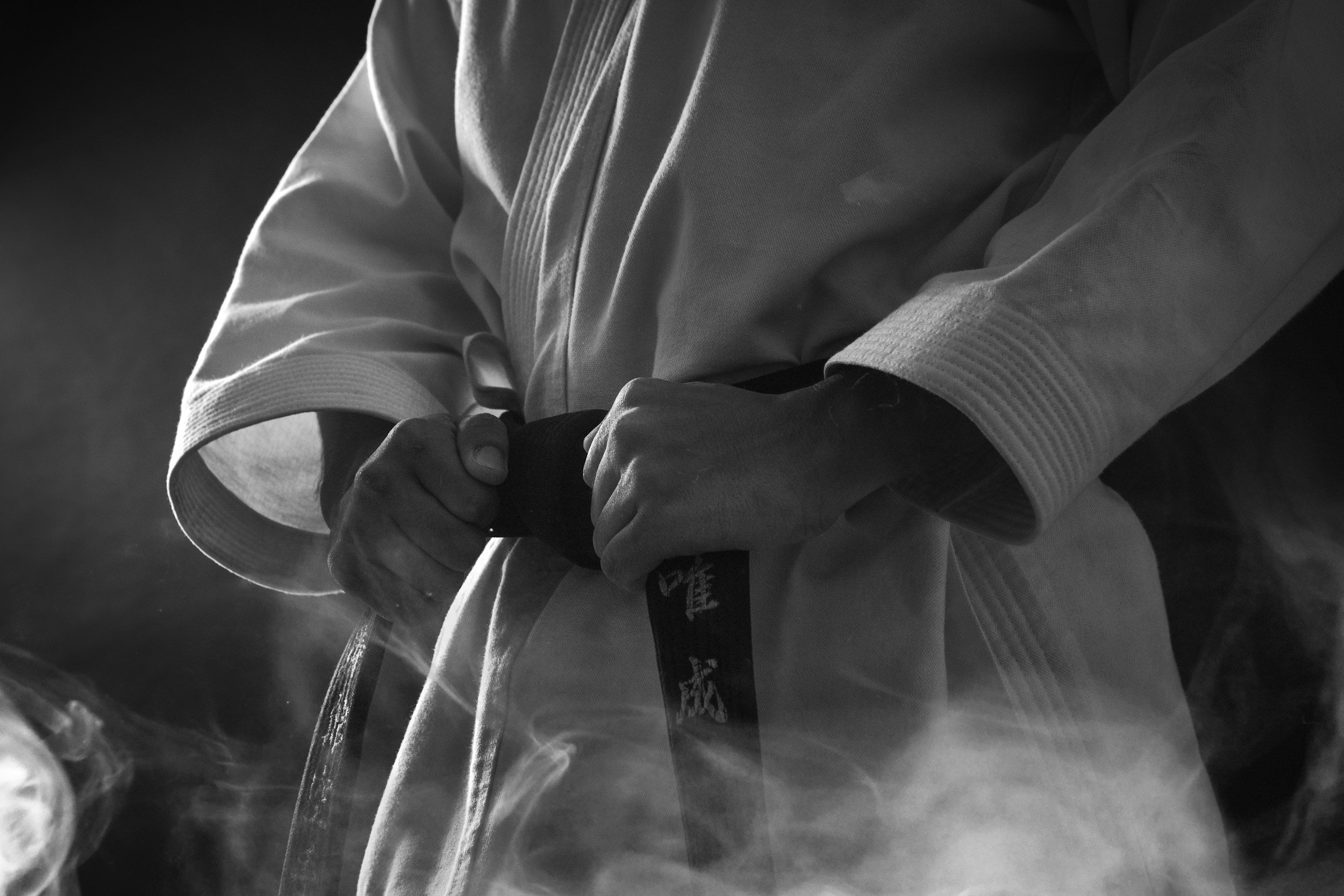
“One can choose to go back toward safety or forward toward growth. Growth must be chosen again and again; fear must be overcome again and again.”
— Abraham Maslow
The Black Belt Drop-Out Phenomenon
There is a running joke among our instructional team at the Riverside Youth Judo Club: ‘The moment someone gets their black belt, that’s the last time you’ll see ‘em.’ It’s mostly said in a lighthearted tone, but the weight of absence doesn’t become any lighter: for some reason, people tend to quit the sport once they receive this fancy black fabric.
We have a handful of reasons behind this phenomenon. For starters, by the time most students reach black belt rank in the United States, they’re grown adults. Adults generally have less free time to spend rolling around on the tatami and more obligations they need to deal with above all. Another reason is that many Westerners assume that the black belt is simply the end, that there is no more rank left to achieve (when in reality, there are 10 degrees of black belt you can potentially earn). While one of those reasons is easily solved with a conversation and the other is near impossible to address thoughtfully, there is a third possibility that is worth pondering in depth.
When you get your black belt, that illustrious symbol that you know what you’re doing… what’s next? How do you improve? Can you improve? If you can, what do you focus on improving? Things become so much more complicated — and so much more intimidating — the more knowledgable you become. It becomes specific, fine-tuned, and detailed in ways you as a student would never have had the opportunity to notice. And even worse, you dread the idea of still needing help, to ask someone wiser to identify your weaknesses you feel you should have mastered already. To be a “master” (note: this is a term I use very loosely to denote the seniority or level by which an advanced player is identified as, not in the power they wield), you may assume, means you have already mastered growth. So I want to challenge you with a question: Is growth something you have truly mastered if your growth has stalled?
Being the chronic over-thinker that I am, I mulled over this question for a while until I found my answer — and funny enough, it wasn’t an answer I found on the judo mat, but in the middle of my sophomore English 2 class.
The Silly Realization I Had About Growth
I work for a Title 1 school in Moreno Valley, educating teens that are considered “at-risk” and struggling in terms of finding their place in this bustling, chaotic, and cold world. As such a story goes, my students also show exceptional struggles in maintaining resilience in academic settings, making the learning process so much more pressured on the instructional staff to find novel ways of building life skills in our kids through classroom learning. The skill I had them focusing on this current day was critical thinking, cleverly concealed within a curriculum-friendly lesson about the literature of the American Romanticism period.
I call on one student to answer a question: “What is the author really saying in paragraph one?”
He replies with re-reading the text.
I challenge him — a practice they have become painfully accustomed to in my class: “Are you paraphrasing or just reading it?”
He nods, telling the truth, and attempts to restate the text in his own words, switching around a couple of choice verbs and nouns here and there; he’s navigating like a fish on land, desperately trying to find his way back into the comfort of the sea.
It’s at this point I realize something insanely important — and hilariously stupid on my behalf: I haven’t taught these kids how to summarize! It felt like such common sense, and yet I neglected it entirely.
So now, after that, I began to model the process that I wanted them to demonstrate: how to paraphrase, summarize, and translate language into my own words. These are the little things in life we forget as we become more professional and well-learned, but are such challenges to those who haven’t been able to assimilate the information yet. With modeling, they are improving on demonstrating the skill of summarizing, and now can focus their attentions on critically assessing an author’s argument as a new challenge.
“But, Danni —” some of you may be asking your screens mentally, “— how does this relate to the black belt drop-out rates, or the lack of growth in your judo students?” Great question.
It’s simple: You must accept you are not done growing as a master of your craft, and you must constantly show your students what that growth looks like.
Some masters forget that growth and development is a very active, conscious process. You have to want it. You can’t just stare and then magically grasp everything. So when instructors simply demonstrate a throw — especially one as complex as a common orange-belt technique like tai-otoshi — and expect their students to put all the puzzle pieces together, the students aren’t to blame for not grasping the subtleties. It is the instructor, who did not model the growth necessary for the students to get every bit and piece of such a dynamic, multi-faceted throw. Just like me in my critical thinking analysis of Romantic literature, judo instructors want to rush right into Level 3 content when, in reality, you need to start off at Level 1 just to make certain everyone is on-board for the ride — no matter the color of their belt.
This lack of acknowledgment to growing pains is what I attribute to the black belt disappearance acts, as well. It is easy to neglect the sacrifices of time you make when you’re young and new. But when you reach a certain nebulous age of mastery — in life, in martial arts, in education — you think to yourself, “Great, that’s it, I made it!” But why do we instantly think that’s the end? We tend to forget how much growing is still necessary in such small, minute little ways; when we cannot find the path forward, we think that there simply is no more forward left.
I urge my students to challenge themselves daily. I show them small ways to grow, and I learn to speak their language. I model the growth I want to see, and outline the steps on how to get there. And if they can’t quite reach that ledge just yet, I break it down some more, focusing on the tiniest skills to master before they reach for the next goal post. After all, I too was a bumbling beginner like them — and still feel like that person quite frequently as an adult. Learning the art of pedagogy has greatly helped me to identify the silent weaknesses in comprehension skills, physical or mental, that limit the growth of my students and self.
Food for Thought in Demonstrating Growth as a Sensei
So to judo instructors this side of the hemisphere wondering to themselves, “Why aren’t my students improving the way I want them to?” I want to ask you one question: “Did you breakdown to them the steps, or did you just show them the end result?”
For clubs that manage consecutive classes (meaning the same students attend the same series of classes, and each class builds upon the last), it may be worthwhile to begin the session with review, even if it seems rudimentary. Skills can easily be lost in translation or memory, so reviewing even basic stepping drills can mean a world of difference to even the highest ranking practitioners. Breaking target techniques or strategies down to their finest details is not a waste of time; it’s clever, clear, and structured statements without words that remind your students, “This is the growth in your abilities I want to see.” While they may still have difficulties in successfully throwing their partner with tai-otoshi, you can still monitor their growth by taking the time to verbally appreciate their more dedicated hand placement, more attention to their center of gravity, or even more automatic turn of their head.
For clubs (like mine) that simply host classes with no strict series in mind (students come and go as they please, for the most part, and classes are separated still by rank), then the problem becomes a bit more specific. You may not be able to spend entire classes on the minutia we’ve broken down in the last paragraph, but there is still room for breakdowns. Review is more important than ever, especially of the basics that absent students could easily miss — step-drills become a daily practice, hand-placement constantly is addressed, and basic techniques like ippon-seoi-nage or osoto-gari become your tested target skills. Consider using skill-based grouping to sort students by how they initially perform in the start-of-practice review: students that struggle in remembering the throw can focus entirely on the steps, the hand placement, and the concept; students who struggle primarily on balance or kuzushi can focus on that second-tier skill in their groups; and finally, students who demonstrate the basics of the throw can address all the more technical elements in their own group, using strategies of comment-based nage-komi to fine-tune specific struggles or weaknesses in each individual.
This isn’t intended to be a “Look at what we’re doing!” type of thing. Our dojo struggles with this; my own classroom struggles with this. But in hopes of identifying the problems that we notice, critically assessing strategies that can help lessen their negative impacts, it lends us to growth of our own as leaders, students, and judoka. There is something to learn and improve upon every day if you just remember to look for it.
